
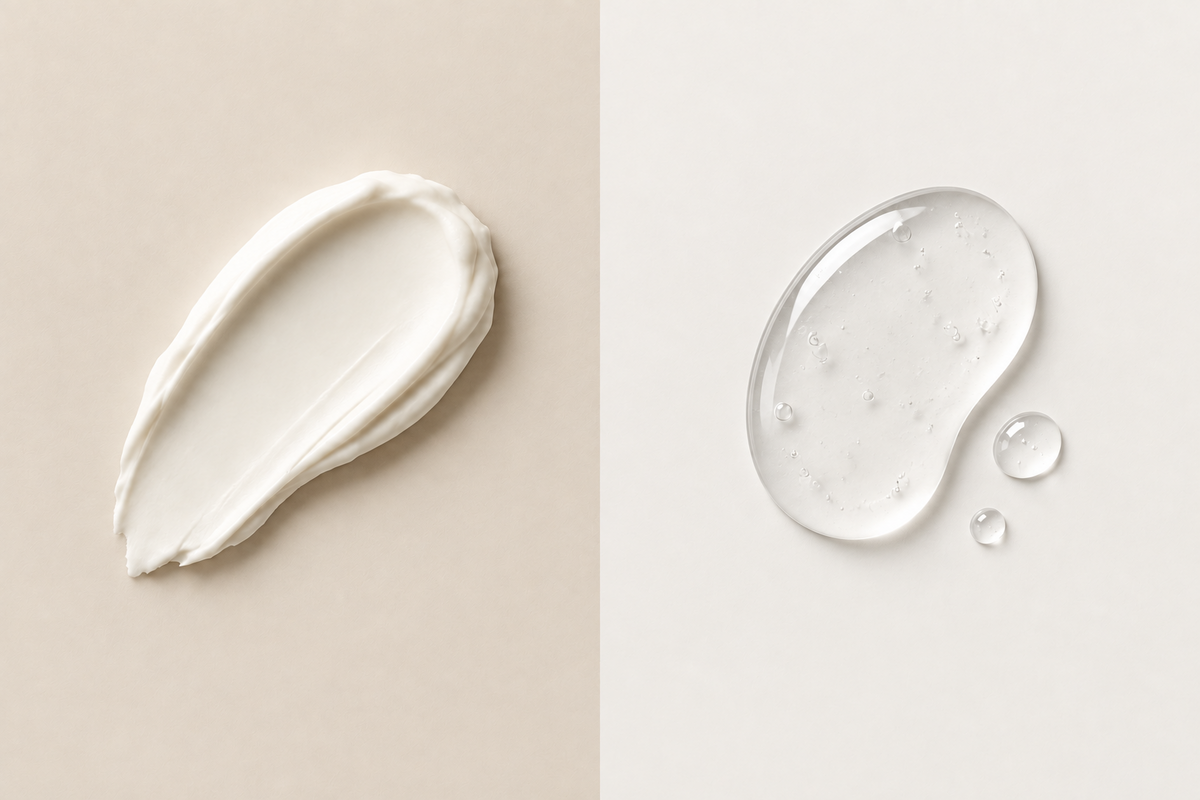
Your Skin Is Thirsty — But That Might Not Be the Problem
Barrier repair serum vs hydrating serum — what’s actually the difference? Both can support dry or dehydrated skin, but they are designed to do different things.
You've been layering hydrating serums faithfully, morning and night, and yet your skin still feels tight, reactive, or stubbornly dull. It's frustrating, and you're not imagining it.
Here's what's often missed: hydration and barrier integrity are two separate skin functions. Hydration refers to the water content in your skin. Barrier integrity refers to the lipid structure that holds that water in. When your barrier is compromised, the water drawn in by humectants escapes before it can do its job — like filling a bucket with holes.
This article walks you through the real difference between hydrating serums and barrier-repair serums, helps you identify which your skin actually needs, and sets honest expectations for what each can do.
What a Hydrating Serum Actually Does
A hydrating serum has one primary goal: increasing and maintaining water content in the upper layers of your skin. It does this through humectants, ingredients that attract water molecules from the environment or from deeper skin layers and bind them to the surface.
Common humectants include hyaluronic acid, glycerin, and beta-glucan. Each works slightly differently, but the principle is the same: pull water in, hold it close, and plump up the skin's outermost layers.
A hydrating serum is the right tool when your skin is genuinely dehydrated but your barrier is still intact. Dehydrated skin typically feels tight and looks dull. You might notice fine lines that smooth out when you press the skin gently. These are water-related symptoms.
A compromised barrier shows up differently: stinging when you apply products, persistent redness, flaking, and reactivity to things your skin used to tolerate without issue. If those symptoms sound familiar, hydration alone won't solve the problem.
Hydrating serums are not formulated to rebuild lipid structures. They address the water, but not the walls that hold it in. If those walls are broken down, the water simply leaves.
What a Barrier-Repair Serum Does Differently
To understand barrier repair, picture your skin's outermost layer (the stratum corneum) as a brick wall. The skin cells are the bricks. The lipids between them, primarily ceramides, cholesterol, and free fatty acids, are the mortar. When that mortar is intact, water stays in and irritants stay out.
When the mortar is damaged or depleted, water evaporates through the gaps. This process is called transepidermal water loss (TEWL), the key clinical measurement of barrier function. Higher TEWL means a more impaired barrier. This is exactly why a hydrating serum can make skin feel temporarily plump in the morning, only for tightness and irritation to return by midday.
Ceramides alone account for approximately 50% of the barrier's lipid composition. But effective repair isn't as simple as adding one ceramide type. Multiple subtypes (such as Ceramide NP, AP, and EOP) need to be present in physiological ratios alongside cholesterol and fatty acids to form the stable lamellar membranes that limit water loss and block irritants.
A well-formulated barrier-repair serum combines humectants with these lipid-replenishing ingredients, along with anti-inflammatory actives and emollients. It addresses the root cause of the problem, not just the symptom of dryness.
Formula pH matters here too. Your skin's natural acid mantle sits between pH 4.5 and 5.5. Barrier-repair formulas calibrated to this range allow their active ingredients to perform properly. Products that ignore this can undermine the very recovery they claim to support.
The Ingredients That Make Barrier Repair Work
Not all barrier-repair serums are created equal. The ingredients, their concentrations, and the overall formulation philosophy all matter. Here's what to look for.
Ceramides (2–5%): As the dominant lipid in your barrier, ceramides are non-negotiable. Look for formulas that include multiple ceramide subtypes in physiological ratios with cholesterol and fatty acids. This combination forms the stable lamellar membranes your barrier needs to function properly. A single ceramide type in isolation won't achieve the same structural repair.
Niacinamide (2–5%): This form of Vitamin B3 stimulates your skin's own production of ceramides, free fatty acids, and cholesterol. It also calms the low-grade inflammation that slows barrier recovery. At these concentrations, niacinamide is one of the most well-tolerated actives for sensitive skin, making it a practical choice during recovery.
Peptides: These signaling molecules communicate with your skin's own repair systems. Rather than simply supplementing lost lipids from the outside, peptides prompt collagen synthesis, barrier lipid production, and cellular renewal, guiding the skin to rebuild itself rather than relying on lipid-only formulas.
Panthenol and squalane: Panthenol (provitamin B5) soothes irritation and supports cellular repair at the surface level. Squalane mimics your skin's natural sebum, providing emollient support that helps the barrier rebuild over time without clogging pores or feeling heavy.
Equally important is what's not in the formula. During barrier recovery, fragrance, essential oils, and drying alcohols are active irritants. A fragrance-free and essential oil-free formulation isn't a marketing claim; it's a meaningful signal that the product was designed with compromised, reactive skin in mind.
How Long Does Barrier Repair Actually Take?
Barrier repair is not an overnight fix, but it's also not as slow as you might fear.
Subjective relief, the kind you can feel, often arrives within 2–3 weeks of consistent use: less stinging when you apply products, reduced tightness through the day, and calmer reactivity overall. These early signs are real and meaningful.
Structural repair, a measurable reduction in TEWL and restored lipid composition, takes longer. Depending on the severity of your barrier compromise, expect 4–12 weeks of consistent use. Clinical research has shown visible improvements in barrier function within 4–8 weeks using formulations based on ceramides, niacinamide, and hyaluronic acid. One published study demonstrated that niacinamide-containing formulations significantly improved barrier function within 4 weeks.
What you pause during this period matters just as much as what you apply. Retinoids, AHAs, BHAs, alcohol-based toners, and physical scrubs all actively disrupt the barrier repair process. Setting these aside temporarily isn't about being overly cautious; it's about not undoing your progress.
This is where simplicity becomes your strongest tool. A minimal, barrier-focused routine consistently outperforms a complex one during recovery. Celulah Skin's 3-step Barrier Routine was designed with exactly this in mind: a guided, simplified approach that removes the guesswork and reduces the overwhelm that comes with trying to figure out what your reactive skin needs.
Consistency and patience, paired with fewer products rather than more, will get you further than any elaborate routine.
So Which One Does Your Skin Actually Need?
If your skin feels tight and dull but tolerates your current products without stinging or flushing, a hydrating serum may be all you need. Your barrier is likely intact, and your skin just needs more water.
If your skin stings, flushes, flakes, or reacts to products it used to handle fine, barrier repair is the priority. No amount of hydration will hold until the structure containing it is restored.
Many people need both, and that's completely normal. But the order matters: repair the barrier first, then layer hydration on top of a stable foundation. Dermatologists increasingly position barrier health as the prerequisite for every other skincare goal, from anti-ageing to brightening to acne control. Without a functioning barrier, those treatments simply can't perform.
Understanding your skin's actual need, rather than adding more products, is the most effective thing you can do. Sometimes the answer isn't more. It's the right thing, done consistently.

Celulah Skin

Leave a comment
This site is protected by hCaptcha and the hCaptcha Privacy Policy and Terms of Service apply.