
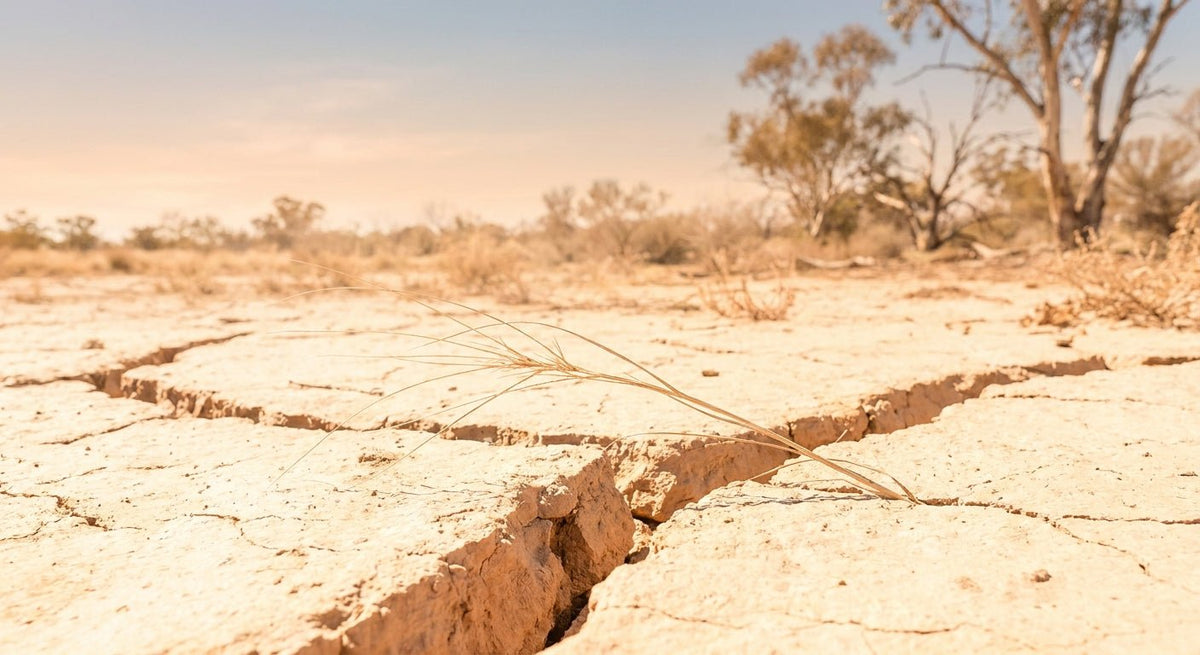
Your Skin Is Under Attack (And It's Not Just the Sun)
In a 2023–2024 survey of over 8,500 Australians, 1 in 14 reported being sunburned in the week before they were asked. That's almost 1.5 million people. But sunburn is only the visible tip of the damage.
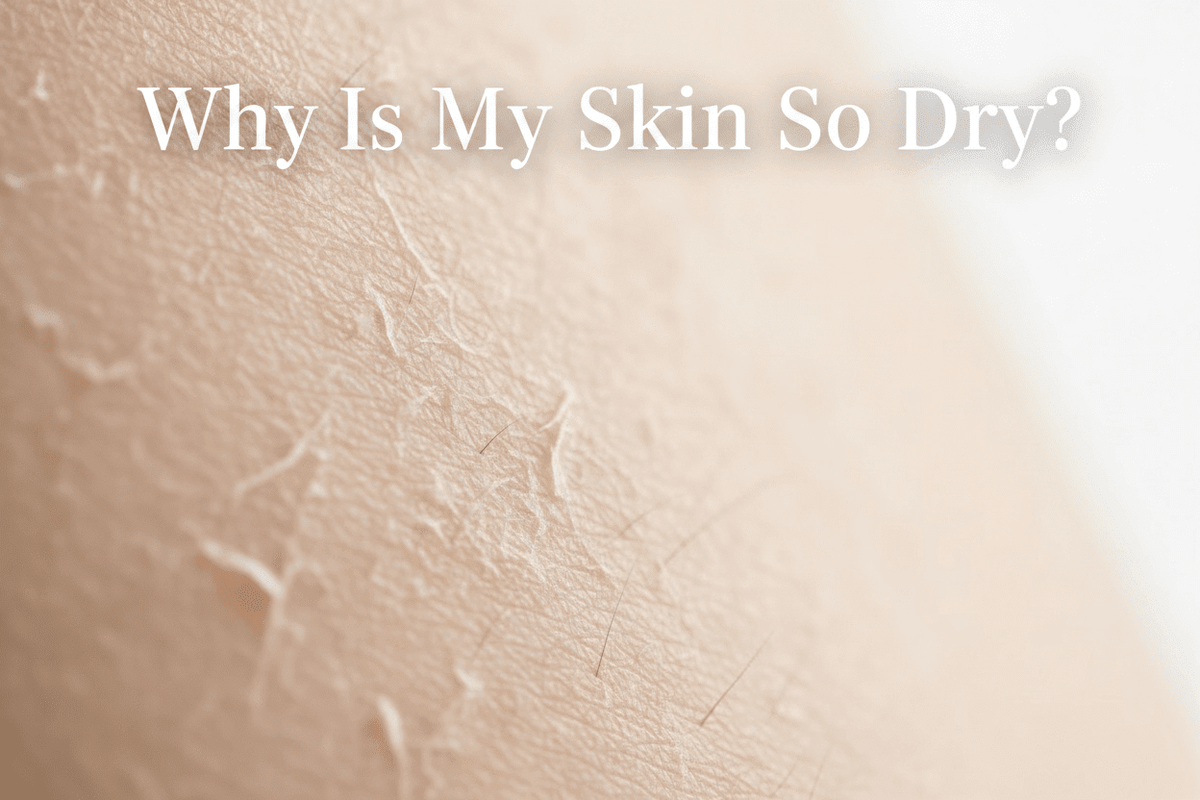
UV radiation, hard water mineral load, and climate variability form a compounding triple threat that chips away at your skin barrier year-round, not just in summer. If your skin feels tight, reactive, or persistently dry despite doing everything right, your environment is likely a major factor.
Your skin barrier is the outermost protective layer of your skin, held together by lipids, including ceramides. When it's intact, it keeps moisture in and irritants out. When it's compromised, everything falls apart. Below are the three interconnected forces working against it.
How Australia's UV Radiation Silently Damages Your Skin Barrier
Australia receives some of the highest UV radiation levels in the world. Our proximity to the equator, the high proportion of clear-sky days, and the southern hemisphere's closer position to the sun during its summer orbit all contribute. This isn't a seasonal concern. Across most Australian cities, the UV Index exceeds 3 (the threshold requiring sun protection) for the majority of the year, including winter months in northern states.
Most people associate UV damage with skin cancer risk, and rightly so. Almost 19,000 Australians were estimated to be diagnosed with melanoma in 2024, and 95% of melanoma cases are attributable to UV exposure. But there's a quieter, daily form of UV damage that rarely gets discussed: what it does to your skin barrier.
UVB radiation penetrates the epidermis, where it induces oxidative stress and DNA damage. Critically, it also disrupts tight junction proteins, the structural connections that hold barrier cells together. This is a distinct mechanism from the cancer pathway, and it's happening with every unprotected exposure.
One of the most significant consequences is ceramide depletion. Ceramides are the lipid molecules that essentially glue your skin barrier together. UV exposure directly reduces ceramide levels, which leads to increased transepidermal water loss (TEWL), dryness, and heightened sensitivity.
This is why UV-exposed skin feels tight, looks dull, and becomes more reactive to products over time. It's a barrier problem, not a product problem.
And the exposure window is widening. Australia has warmed by an average of 1.44°C since national records began in 1910, with every decade since 1950 warmer than the one before. Warmer conditions mean more time spent outdoors and more prolonged UV exposure across all seasons. The barrier damage accumulates quietly, month after month.
The Invisible Saboteur: How Your Tap Water Is Undermining Your Skincare
When skincare isn't working, most of us troubleshoot our products. We swap serums, try new moisturisers, simplify or complicate our routines. But there's one factor almost nobody considers: the water coming out of the tap.
Hard water is alkaline. Your skin's acid mantle (the slightly acidic protective film on its surface) sits at a pH of around 4.5 to 5.5. When you wash with hard water, it raises your skin's pH, weakening the acid mantle and leaving the barrier vulnerable to irritants, dehydration, and inflammation.
Then there's the soap scum problem. Calcium and magnesium ions in hard water bind to the surfactants in your cleanser, forming an insoluble film that coats the skin. This residue physically blocks moisturisers from absorbing and increases TEWL. You're applying your skincare on top of a mineral film, not onto clean skin.
The variation across Australian cities is dramatic. Perth has the hardest tap water of any Australian capital, with hardness levels reaching up to 226 mg/L CaCO₃ in some suburbs. Melbourne, by contrast, has very soft water at approximately 25 mg/L CaCO₃. The same moisturiser will perform very differently depending on which city you live in.
There's also chloramine to consider. Brisbane, Sydney, Adelaide, Perth, and Darwin all use chloramine as a water disinfectant. Unlike chlorine, chloramine is far more persistent and harder to remove. It strips natural skin oils and disrupts the barrier, particularly in people with sensitive or eczema-prone skin.
The clinical evidence backs this up. A University of Nottingham study of over 7,500 school-age children found that eczema prevalence was significantly higher in hard water regions, even after controlling for other risk factors. Hard water also increases the deposition of sodium lauryl sulfate (SLS) from cleansers onto the skin, worsening TEWL and irritation, especially in individuals carrying filaggrin gene mutations that already predispose them to barrier weakness.
If you live in Perth, Brisbane, Sydney, or Adelaide and your skin feels perpetually dry, or your moisturiser never seems to absorb properly, your water supply is a clinically relevant factor. It's not a flaw in your routine.
Climate Variability: The Year-Round Barrier Stressor Most Skincare Advice Ignores
Australia's climate extremes don't just sit alongside UV and hard water damage. They compound it. Intense heat, low humidity, and wind create a year-round barrier stressor, not a seasonal one.
When the air is drier than your skin, moisture is pulled outward through the barrier and into the environment. This accelerated TEWL leaves the barrier depleted and skin feeling tight and papery. Wind physically disrupts the outermost skin layer and speeds up moisture loss, particularly in southern states during winter and in arid inland regions throughout the year.
A useful reframe: barrier repair is a climate adaptation strategy. Just as Australians adapt their lifestyle to the environment (UV-protective clothing, staying hydrated), the skin requires year-round, environment-aware barrier support, not just summer SPF.
The scale of the problem is significant. Globally, up to 70% of women and 50–60% of men report some degree of sensitive skin, with impaired barrier function identified as a core characteristic. In Australia's harsh environment, these proportions are likely higher and the triggers more intense. It's also worth noting that 23.9% of Australians now suffer from hay fever and allergic rhinitis, up 15% from 2007–2008, reflecting a broader trend of increasing environmental sensitivity. The skin is not isolated from this immune picture.
What Your Skin Actually Needs: Building a Barrier-First Routine for the Australian Environment
The picture is clear: UV depletes ceramides and disrupts tight junctions. Hard water raises skin pH and blocks product absorption. Climate extremes accelerate moisture loss. Together, these demand a barrier-first approach to skincare.
Barrier-first means prioritising ingredients that replenish ceramides, support the acid mantle, and reduce TEWL, rather than layering actives onto a compromised foundation. It means building a routine around repair, not performance.
Going fragrance-free and essential oil-free is part of this strategy, and it's backed by data. 18.9% of Australians report chemical sensitivity to everyday products, and fragrance is the most common trigger. For a barrier already under environmental stress, fragrance is an unnecessary and avoidable irritant.
A simplified routine matters too. Fewer, more purposeful products reduce the risk of ingredient conflict and barrier overload, which is particularly important for reactive skin already dealing with environmental stressors.
This is exactly why our Barrier Repair Moisturiser exists. As a fragrance-free, ceramide-supporting moisturiser formulated specifically for compromised and sensitive skin, it directly addresses the ceramide depletion and increased TEWL caused by UV and hard water exposure, without adding unnecessary ingredients that could further irritate a stressed barrier.
Consistent, gentle barrier support isn't a luxury for sensitive skin. In Australia's environment, it's a year-round necessity.
The Bottom Line: Your Environment Is Working Against Your Skin — Here's How to Work With It
If your skin feels persistently reactive, tight, or dry despite a considered routine, the problem is likely environmental, not a personal failing or a product failure.
Australia's UV intensity depletes ceramides and disrupts barrier proteins year-round. Hard water raises skin pH, blocks absorption, and strips natural oils. Climate extremes accelerate moisture loss in every season. These forces compound each other, and they require a response that goes beyond any single product swap.
Understanding these mechanisms is the first step. A barrier-first, fragrance-free, simplified approach is both clinically supported and genuinely achievable.
At Celulah Skin, every product is formulated with this environment in mind, because Australian skin deserves skincare built for Australian conditions, not adapted from formulas designed for gentler climates. If you'd like to keep learning, explore our Skin Education blog for more on barrier repair, ceramides, and building a sensitive skin routine that actually works with your environment.

Leave a comment
This site is protected by hCaptcha and the hCaptcha Privacy Policy and Terms of Service apply.