

Ceramides Explained: What Are Ceramides in Skincare & Why Does Your Skin Need Them?
If you've ever searched for skincare for dry, sensitive or compromised skin, chances are you've come across the word ceramides. Ceramides for skin barrier support are especially important when skin feels dry, sensitive or compromised. They are naturally occurring lipids that help form part of the skin’s protective outer layer.
They're frequently found in moisturisers, serums and other products designed to support the skin barrier — but what exactly are ceramides, and what do they actually do for your skin?
As a dermal therapist and nurse, I like to explain ceramides as part of the "mortar" that helps hold your skin barrier together.
What are ceramides?
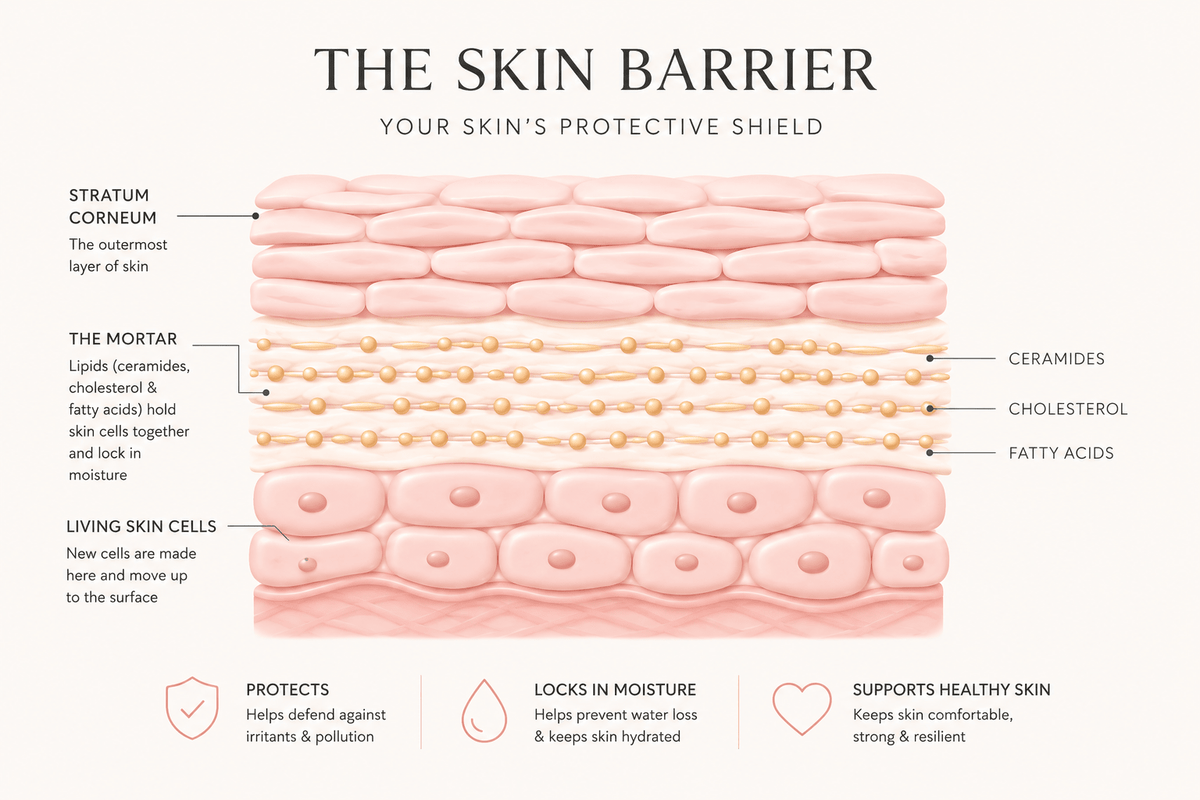
Ceramides are naturally occurring lipids, or fats, found in the outermost layer of your skin.
They make up a significant proportion of the lipids within the stratum corneum — the outer layer of the epidermis — and play an important role in maintaining an effective skin barrier.
An easy way to understand this is to imagine your skin barrier as a brick wall.
Your skin cells are the bricks, while lipids including ceramides, cholesterol and fatty acids form the mortar around them.
Together, they help create a protective barrier that keeps moisture in and helps protect your skin from the outside environment.

What do ceramides do for your skin?
Ceramides are an important part of normal barrier function.
An effective skin barrier helps:
- Reduce water loss from the skin
- Maintain hydration
- Protect against environmental stressors and irritants
- Keep skin feeling soft and comfortable
- Support the overall integrity of the skin barrier
This is why ceramides in skincare are particularly popular for skin that feels dry, tight, sensitive or compromised.
What happens when your skin barrier is low in ceramides?
The amount and composition of ceramides in the skin can change with age, environmental conditions and certain skin conditions.
Barrier function can also be disrupted by things such as:
- Over-cleansing
- Excessive exfoliation
- Harsh or stripping skincare
- Frequent use of irritating active ingredients
- Cold weather and low humidity
- UV exposure
When the skin barrier isn't functioning effectively, more water can escape from the skin — known as transepidermal water loss (TEWL).
You may notice:
- Dryness
- Tightness
- Flaking
- Increased sensitivity
- Redness
- Rough-feeling skin
- Products suddenly feeling uncomfortable on your skin
If you're experiencing several of these symptoms, you may also find How to Repair a Damaged Skin Barrier helpful.
Why are ceramides used in skincare?
Ceramides can be incorporated into skincare products to help support the skin's natural barrier.
I particularly like them because they fit beautifully into a barrier-first approach to skincare.
They're not included to aggressively exfoliate or stimulate the skin. Instead, they're used to replenish and support components similar to lipids naturally found within the skin barrier.
For someone whose skin already feels overwhelmed, that distinction can matter.
Are ceramides good for sensitive skin?
Ceramide-containing skincare can be a useful option for sensitive skin because ceramides themselves are naturally present in the skin barrier.
However, having ceramides on an ingredient list doesn't automatically make an entire product suitable for sensitive skin.
The whole formulation matters.
If your skin is reactive, look at the complete ingredient list and consider factors such as fragrance, exfoliating acids, retinoids and other ingredients you know your skin doesn't tolerate.
This is one reason I don't believe skincare should be judged by a single hero ingredient.
Are ceramides good for dry skin?
They can be particularly useful in skincare designed for dry skin.
Dry skin can have difficulty maintaining an effective barrier and retaining water. Ceramides used alongside other moisturising ingredients can help support the lipid component of the skin barrier.
A well-formulated moisturiser may combine ceramides with ingredients such as:
- Cholesterol
- Fatty acids or other emollients
- Squalane
- Panthenol
- Glycerin
- Hyaluronic acid
- Beta-glucan
Different ingredients perform different roles, which is why a balanced formulation is usually more important than chasing one ingredient.
Ceramides vs hyaluronic acid: what's the difference?
Ceramides and hyaluronic acid aren't interchangeable.
Hyaluronic acid is a humectant. It helps attract and retain water, supporting skin hydration.
Ceramides are lipids and form part of the structure of the skin barrier.
Think of it this way: hydration gives your skin water, while an effective barrier helps reduce how readily that water is lost.
That's why you'll often see humectants and barrier-supporting lipids used together.
What should you look for in ceramide skincare?
If you're choosing ceramide skincare, don't focus only on whether the word "ceramide" appears on the front of the packaging.
Look at the formulation as a whole.
For dry, sensitive or compromised skin, I generally prefer formulas that combine ceramides with complementary barrier-supporting and hydrating ingredients.
You may see individual ceramides listed on an ingredient list under names such as Ceramide NP, Ceramide AP or Ceramide EOP, although ingredient naming can vary.
Ceramides may also be formulated alongside cholesterol and other lipids to support a more complete barrier-focused formula.
Do you need ceramides in every skincare product?
No.
You don't need a ceramide cleanser, ceramide serum, ceramide moisturiser and every other product in your routine to contain them.
More isn't automatically better.
A well-formulated ceramide moisturiser or serum can fit perfectly well into an otherwise simple routine.
For sensitive skin especially, I would rather see a few products that your skin tolerates consistently than a complicated routine built around adding as many "barrier" ingredients as possible.
How do ceramides fit into a damaged skin barrier routine?
If your skin barrier feels compromised, ceramides can form part of a simple barrier-supporting routine.
That might look like:
Morning:
Gentle cleanse if needed → moisturiser → broad-spectrum sunscreen
Evening:
Gentle cleanser → hydrating or barrier-supporting serum if tolerated → moisturiser
At the same time, consider reducing anything that may currently be irritating your skin, such as excessive exfoliation or overuse of strong active ingredients.
Why we use ceramides at Celulah
Ceramides feature in Celulah formulations because they align with the way I wanted to formulate skincare from the beginning: support the skin rather than constantly challenge it.
Rather than relying on one fashionable hero ingredient, I prefer combining ingredients that perform complementary roles.
Across our barrier-focused formulas, that can include ceramides alongside ingredients such as panthenol, beta-glucan, ectoin, squalane and hyaluronic acid.
The goal is comfortable, hydrated, resilient-looking skin without making your routine unnecessarily complicated.
If you'd like to understand another ingredient we use for barrier support, read What Does Panthenol (Vitamin B5) Do for Your Skin?
And if your skin currently feels tight, flaky, reactive or uncomfortable, start with How to Repair a Damaged Skin Barrier.
Healthy-looking skin starts with respecting the barrier — and ceramides are one of the important lipids that help it do its job.
— Nicole Phillips
Founder • Dermal Therapist • Nurse
This article provides general skincare information and is not intended to diagnose or treat a medical condition. If you have persistent, severe or unexplained skin symptoms, seek advice from an appropriate healthcare professional.


Leave a comment
This site is protected by hCaptcha and the hCaptcha Privacy Policy and Terms of Service apply.