

Why Your Skin Barrier Matters
Your skin barrier may not be the most exciting part of skincare, but it influences almost everything you want from your routine — hydration, comfort, smoother-looking skin and how well your skin tolerates active ingredients.
It doesn’t promise glass skin. It isn’t the newest active ingredient. And it certainly doesn’t photograph particularly well on social media.
But almost everything you want from your skincare — hydration, comfort, smoother-looking skin and the ability to use active ingredients — depends, at least partly, on what’s happening at the surface of your skin.
That’s why I pay so much attention to the skin barrier.
Not because “barrier repair” is trending.
Because skin function comes before skincare trends.

Your skin is supposed to be a barrier
We often talk about skincare as though our job is to make ingredients penetrate the skin.
But your skin is actually designed to do something quite different.
It is designed to keep things out and keep important things in.
The outermost part of the epidermis creates a remarkably effective boundary between your body and the environment.
It helps limit the amount of water that escapes from your skin while providing protection from the world around you.
And that’s important because your skin is exposed to a lot.
Water. Cleansers. Makeup. Sunscreen. Weather. Pollution. Skincare products. UV radiation.
Your barrier is dealing with all of it, every day.
Think of your barrier as the foundation, not the finish
Imagine painting a wall with a cracked, uneven surface.
You can buy the most expensive paint available, but the finish will still be influenced by what’s underneath.
Skin is obviously far more complex than a wall, but the principle helps explain something I see all the time.
People become unhappy with their skin, so they focus entirely on treatments.
They buy something for pigmentation.
Something for wrinkles.
Something for pores.
Something for texture.
Something to exfoliate.
Something to brighten.
But very little attention is given to whether their skin is actually tolerating the routine.
We become so focused on changing our skin that we forget to support it.
Hydration isn’t only about putting water into your skin
This is where the barrier becomes particularly important.
When someone tells me their skin is dehydrated, the immediate response is often:
“I need a hydrating serum.”
Maybe.
But hydration isn’t only about what you put onto your skin.
It’s also about how effectively your skin holds onto water.
Water naturally moves through the skin and is lost to the environment. Your barrier helps regulate that process.
So if your skin repeatedly feels dehydrated despite layer after layer of hydrating products, it can be useful to look beyond the serum bottle.
The question isn’t only:
“Am I adding enough hydration?”
It’s also:
“Am I supporting my skin’s ability to retain it?”
That distinction completely changes the way I think about skincare.
Read: Dry Skin vs Dehydrated Skin — What’s the Difference?
Your barrier can change how skincare feels
Here’s another reason the barrier matters.
The exact same product can feel completely different on the same person’s skin at different times.
A moisturiser you’ve used happily for six months suddenly stings.
A cleanser you’ve always loved suddenly leaves you feeling tight.
You assume the product has changed.
Sometimes it hasn’t.
Your skin has.
If the surface of your skin is irritated or compromised, products that previously felt completely comfortable may suddenly feel very different.
That’s one reason I don’t like immediately labelling someone as having “bad” or “difficult” skin.
Skin changes.
Its environment changes.
Hormones change.
Skincare routines change.
And its tolerance can change with them.
Read: Why Does My Skin Burn After Applying Skincare?
Stronger isn’t useful if your skin can’t tolerate it
This is probably the biggest reason the skin barrier influences my approach to skincare.
An ingredient can have excellent evidence behind it.
But if the way you’re using it leaves your skin continually irritated, you have a problem.
The strongest retinoid isn’t automatically the best retinoid for you.
The highest percentage isn’t automatically the best formula.
Exfoliating more often isn’t automatically more effective.
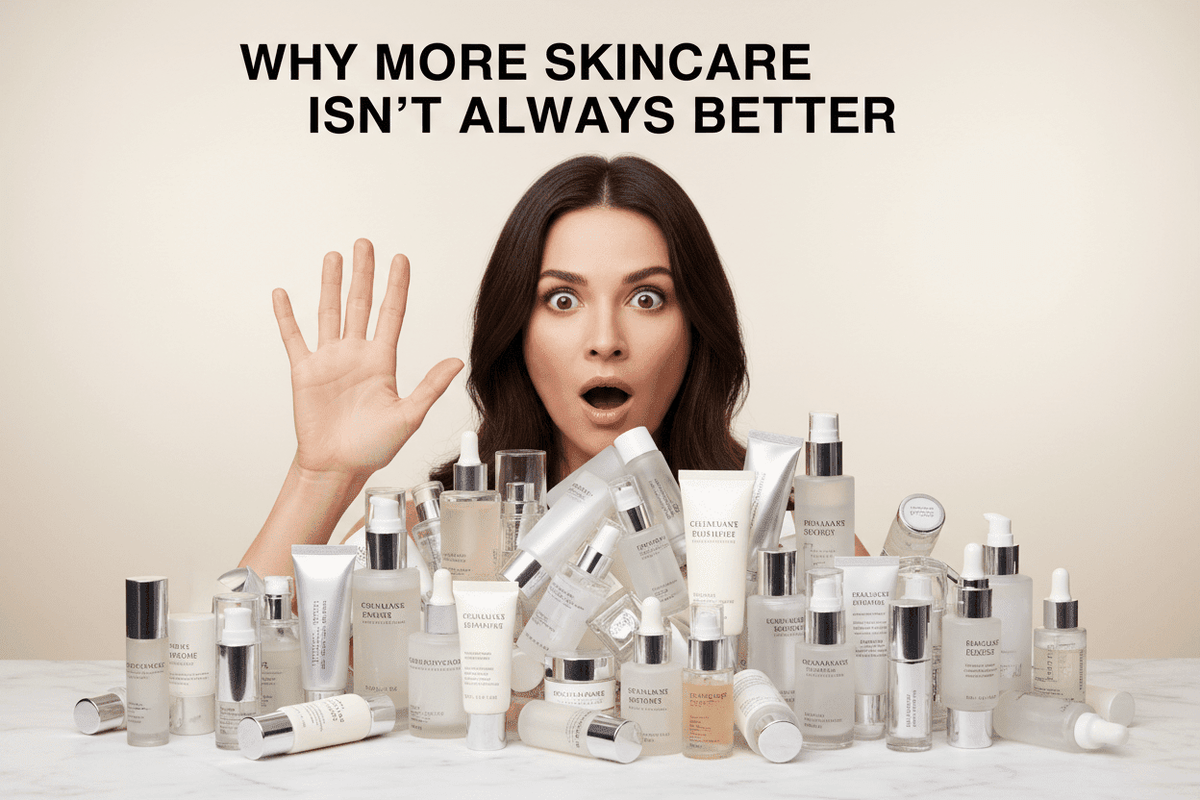
And a ten-step routine isn’t automatically more advanced than a four-step one.
Effective skincare needs to be something your skin can actually tolerate consistently.
That’s a much less exciting message than:
“This ingredient will transform your skin in seven days.”
But it’s a far more useful one.
Your barrier doesn’t care what’s trending
This is something I wish more people remembered.
Your skin doesn’t know that an ingredient has gone viral.
It doesn’t know that everyone on TikTok is skin cycling.
It doesn’t know that a 20% concentration looks more impressive on a label than 5%.
And it certainly doesn’t know how much you paid for the bottle.
It responds to formulation, frequency, environment and individual tolerance.
That’s why copying someone else’s skincare routine doesn’t guarantee their results.
Two people can use exactly the same product and have completely different experiences.
“Barrier-first” doesn’t mean boring skincare
I think this is an important distinction.
Supporting your barrier doesn’t mean you’re never allowed to exfoliate.
It doesn’t mean avoiding every active ingredient.
And it doesn’t mean sensitive skin has to use nothing but cleanser and moisturiser forever.
I don’t want that for my own skin either.
I still care about fine lines, firmness, hydration, texture and how my skin looks as it ages.
The difference is how we approach those concerns.
Instead of asking:
“What’s the strongest thing I can put on my skin?”
I prefer:
“How can I address this concern without unnecessarily compromising skin comfort?”
That’s a very different philosophy.
And it’s the philosophy behind Celulah.
This is why formulation matters more than ingredient collecting
Skincare marketing has trained us to shop for individual ingredients.
Ceramides.
Peptides.
Niacinamide.
Hyaluronic acid.
PDRN.
Retinoids.
Vitamin C.
But your skin never experiences an ingredient in isolation.
It experiences the finished formula.
Its concentration.
Its delivery system.
Its pH.
The ingredients surrounding it.
And then everything else you’re putting on your face.
That’s why I don’t believe good skincare is simply about squeezing as many fashionable ingredients as possible into one routine.
More isn’t automatically more sophisticated.
Sometimes thoughtful formulation is about knowing what not to add.
Why this became so important to me when creating Celulah
When I started developing Celulah Skin, I didn’t want sensitive skin to mean skincare that did nothing beyond moisturising.
But I also didn’t want to create another range built around the idea that skin needs to be constantly pushed.
I wanted the middle ground.
Skincare that respects the barrier while still addressing the things many of us actually care about.
Hydration.
Visible redness.
Fine lines.
Texture.
Firmness.
How our skin changes as we age.
That’s why barrier support isn’t a separate category within Celulah.
It’s part of the way I think about every formula.
Not because everyone has a damaged barrier.
And not because every skin concern can be blamed on the barrier.
But because whatever else we’re trying to achieve, we’re still working with skin.
And respecting how skin functions should come first.

The Bottom Line
Your skin barrier matters for a surprisingly simple reason:
It affects the environment in which everything else in your skincare routine has to work.
It influences how effectively your skin retains water.
It can influence how comfortable products feel.
And its condition can affect how much your skin tolerates.
That doesn’t mean every breakout, wrinkle, patch of redness or dry spot is a “barrier problem.”
It means the barrier deserves a place in the conversation.
So before asking what else you can add to your routine, sometimes there’s a better question:
How is my skin actually coping with what I’m already doing?
That question isn’t particularly trendy.
But it can tell you a lot.
Celulah Skin
Barrier-first skincare for sensitive, reactive and easily overwhelmed skin.
This article provides general skincare information and isn’t intended to diagnose or treat a medical condition. Persistent or significant skin symptoms should be assessed by an appropriately qualified healthcare professional.


Leave a comment
This site is protected by hCaptcha and the hCaptcha Privacy Policy and Terms of Service apply.