

Why Your Skincare Is Making Your Skin Worse (And What to Do Instead)
You’re doing everything you’re told you’re supposed to do.
You’re cleansing. Exfoliating. Using serums. Applying moisturiser. Maybe you’ve added retinol, vitamin C or another active ingredient you’ve seen recommended online.
And yet somehow your skin seems to be getting worse.
It’s more sensitive.
More reactive.
Products suddenly sting.
Your skin feels tight after cleansing, and you’re constantly searching for the next product that might finally fix it.
If this sounds familiar, your skincare routine itself may be part of the problem.
Not because skincare is bad for your skin — but because sometimes we simply ask our skin to tolerate too much at once.
Can Too Much Skincare Make Your Skin Worse?
Yes, particularly if your routine contains several products that have the potential to irritate your skin.
More products don’t automatically mean better results.
One of the biggest patterns I see is someone experiencing a skin concern and responding by continually adding more:
A stronger exfoliant.
Another serum.
A higher concentration.
A retinoid.
Another acid.
A new cleanser.
Eventually, it becomes difficult to know what’s helping, what’s doing nothing and what’s actually making the skin uncomfortable.
If your skin has suddenly become red, tight, flaky, sensitive or reactive, sometimes the most useful thing you can do is stop adding more and look at your routine as a whole.
Over-Exfoliation
AHAs and BHAs can be useful skincare ingredients.
But exfoliating more frequently doesn’t automatically produce better skin.
Overusing exfoliating acids, combining several exfoliating products or continuing to exfoliate skin that’s already irritated can disrupt the skin barrier and contribute to:
- Redness
- Tightness
- Dryness
- Flaking
- Increased sensitivity
- Stinging when applying skincare
- Products you previously tolerated suddenly feeling uncomfortable
If your moisturiser suddenly stings after you’ve increased your exfoliation, that doesn’t necessarily mean your moisturiser is the problem.
Your skin may already be irritated before the moisturiser ever touches it.
Retinoids Can Be Too Much — Especially Too Quickly
Retinoids are well-researched ingredients used to address several skin concerns, including visible signs of ageing and acne.
They’re not inherently bad for sensitive skin.
But they can cause dryness, peeling and irritation, particularly when introduced too quickly, used too frequently or combined with other potentially irritating products.
If your skin is already burning, peeling or uncomfortable, continually increasing your retinoid use probably isn’t the answer.
Sometimes your skin needs time before you’re ready to introduce it again.
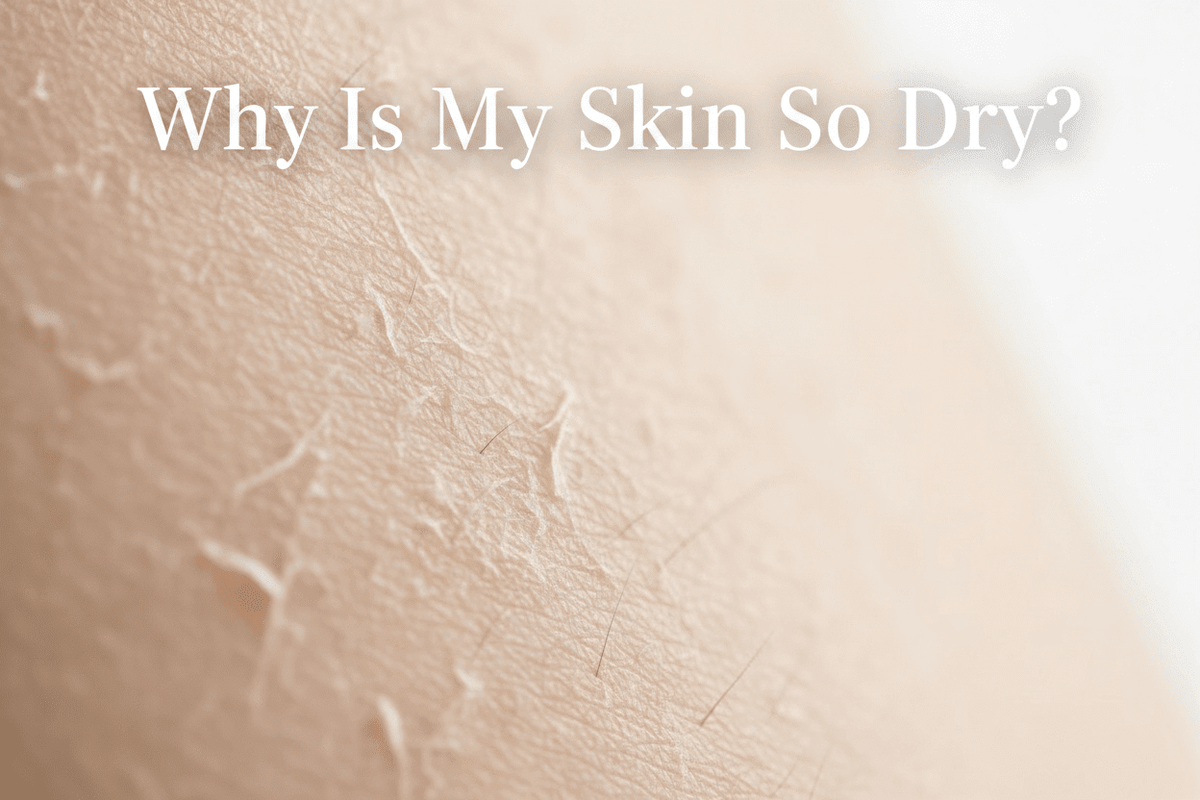
Read: Why Does My Skin Burn After Applying Skincare?
Are You Using Too Many Active Ingredients?
This is another common problem.
Individually, vitamin C, exfoliating acids, retinoids, niacinamide and other active ingredients can all have a place in a skincare routine.
That doesn’t mean your skin needs all of them at once.
If you introduce several products together and your skin becomes irritated, it also becomes incredibly difficult to identify which product is responsible.
This is why I prefer introducing new skincare one product at a time.
It isn’t as exciting as completely replacing your routine overnight.
But it makes understanding your skin much easier.
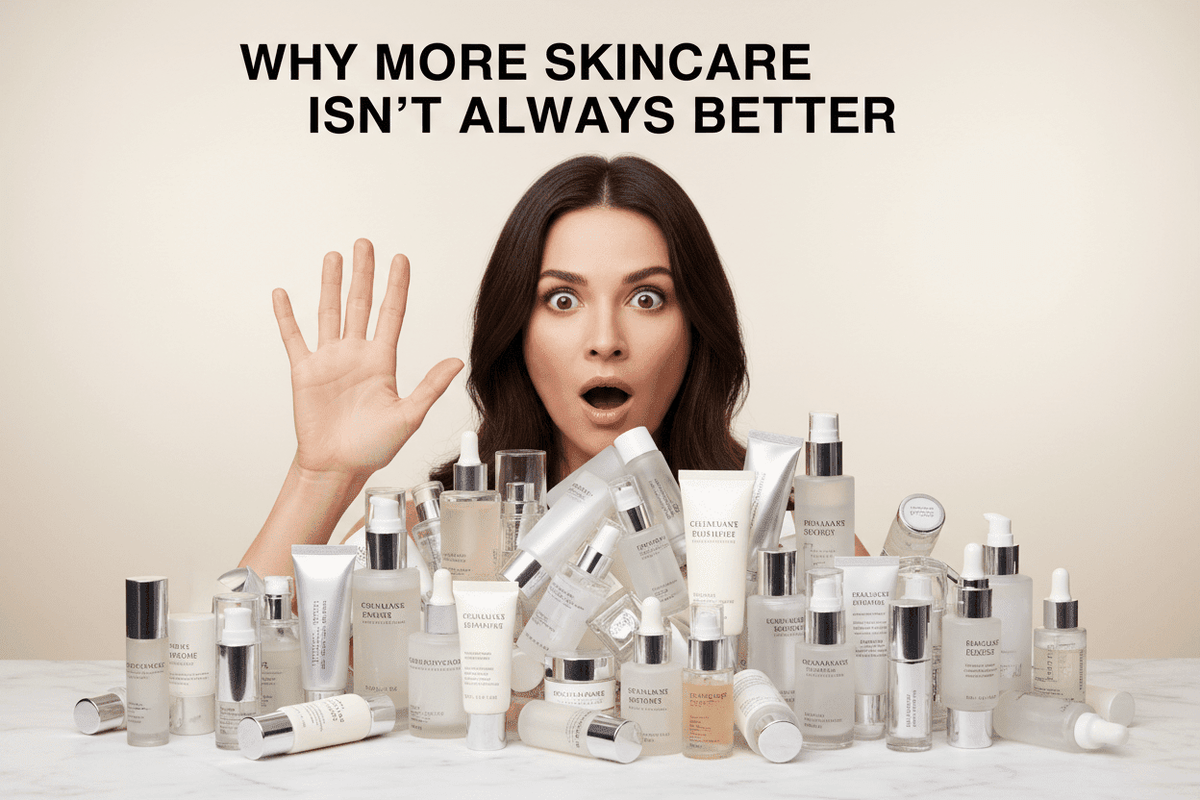
Read: Why More Skincare Isn’t Always Better
Could Your Cleanser Be Making Your Skin Worse?
Your cleanser is something you may use every single day, so it’s worth paying attention to how your skin feels afterwards.
A good cleanser should remove what you need it to remove — sunscreen, makeup, excess oil and impurities — without leaving your skin feeling uncomfortable.
If your face consistently feels:
- Tight
- Dry
- Squeaky
- Rough
- Uncomfortable immediately after cleansing
your cleanser or cleansing routine may not be the right fit for your skin.
And don’t assume foaming automatically means harsh.
The surfactant system, concentration, pH and overall formulation all matter.
Some normal, combination or oily sensitive skin types tolerate a well-formulated foaming cleanser beautifully, while very dry or easily stripped skin may prefer something creamier.
Pay attention to how your skin feels, not just the category written on the bottle.
Read: Why Your Skin Feels Tight After Cleansing
What About Fragrance and Essential Oils?
Fragrance isn’t guaranteed to cause problems for everyone.
Many people use fragranced skincare without experiencing irritation.
But fragrance can be a trigger for some sensitive or reactive skin types.
The same applies to essential oils.
“Natural” doesn’t automatically mean gentler or more appropriate for sensitive skin.
If your skin has become unusually reactive, choosing products without added fragrance or essential oils can remove potential sources of irritation while you simplify your routine.
Read: The Truth About Fragrance in Skincare
Your Skin Barrier May Be Struggling
If suddenly everything seems to sting, it’s worth thinking about your skin barrier.
Your skin barrier is the outermost layer of your skin and plays an important role in reducing water loss and protecting the skin from the outside environment.
When barrier function becomes compromised, you may notice:
- Increased dryness or dehydration
- Tightness
- Flaking
- Increased sensitivity
- Redness
- Skincare suddenly stinging
- Products you’ve used for years becoming uncomfortable
This doesn’t mean every case of sensitive skin is caused by a damaged skin barrier.
But if your skin has changed suddenly — particularly after increasing active ingredients or exfoliation — barrier function is worth considering.
Read: What Is Your Skin Barrier and Why Does It Matter?
Why Does Moisturiser Suddenly Sting?
This one confuses people.
You stop using your strong products, apply a basic moisturiser — and even that stings.
So you assume you’re reacting to the moisturiser too.
Possibly.
But if your skin is already irritated or compromised, products that would normally feel comfortable can sometimes cause stinging.
That doesn’t mean you should continue using something that causes significant burning.
If a product repeatedly causes discomfort, stop using it and reassess.
But don’t immediately assume you’ve suddenly become allergic to every skincare ingredient either.
Read: Why Does My Skin Burn After Applying Skincare?
Are You Constantly Changing Products?
This is another habit that can make troubleshooting sensitive skin extremely difficult.
You try something for a few days.
Your skin doesn’t immediately transform.
So you change it.
Then add another serum.
Then see something trending online and add that too.
Eventually, you have no idea which product is doing what.
Skincare usually needs consistency.
And if you have reactive skin, continually introducing new products can make it much harder to identify what your skin actually tolerates.
Your skin doesn’t know what’s trending.
It only knows what you’re putting on it.
What Should You Do When Skincare Is Making Your Skin Worse?
If your skin is currently burning, peeling, unusually dry or increasingly reactive, I wouldn’t respond by immediately buying another collection of products.
Start by simplifying.
Step 1: Pause Products That Are Clearly Irritating Your Skin
If a particular exfoliant, retinoid, scrub or other product consistently leaves your skin burning or uncomfortable, stop using it for now.
You can reassess whether it’s appropriate for your skin once your skin feels comfortable again.
Step 2: Cleanse Gently
Choose a cleanser appropriate for your skin type that leaves your face feeling clean but comfortable.
Avoid very hot water and unnecessary scrubbing.
Step 3: Support Hydration
If your skin feels dehydrated, ingredients such as:
- Glycerin
- Hyaluronic acid
- Panthenol
- Beta-glucan
- Ectoin
can be useful in hydrating formulations.
Step 4: Moisturise
Choose a moisturiser your skin tolerates that provides enough hydration and emollience for your skin type.
Barrier-supporting ingredients such as ceramides can be particularly useful.
Step 5: Keep Using Sun Protection
Broad-spectrum sunscreen remains an important part of your daytime routine.
Choose one that’s appropriate for your skin and use it according to the directions.
Step 6: Give Your Skin Time
There’s no universal number of days or weeks that applies to every irritated skin barrier.
Recovery depends on what’s causing the problem, your individual skin and whether the trigger is still present.
Instead of counting days, look for signs that your skin is becoming more comfortable:
- Less tightness
- Less flaking
- Reduced sensitivity
- Skincare feeling comfortable again
- Better hydration
- Less reactivity
Then introduce additional products gradually rather than putting everything back on at once.
What Ingredients Can Support Sensitive Skin?
Instead of looking for the strongest active ingredient, I prefer looking at the overall formulation.
Some ingredients I particularly like in barrier-focused skincare include:
Ceramides
Ceramides are lipids naturally present within the skin barrier and help support its structure and reduce moisture loss.
Read: Ceramides Explained — Why Your Skin Needs Them
Panthenol
Panthenol, or Vitamin B5, supports hydration and skin comfort.
Read: What Does Panthenol (Vitamin B5) Do for Your Skin?
Beta-Glucan
Beta-glucan is a humectant that helps support hydration and skin comfort.
Ectoin
Ectoin supports hydration and helps protect the skin against environmental stress.
Squalane
Squalane is an emollient that helps soften the skin and reduce moisture loss.
Hyaluronic Acid
Hyaluronic acid attracts and retains water to support skin hydration.
Niacinamide
Niacinamide can support skin barrier function and improve the appearance of uneven skin tone.
Some sensitive skin types tolerate it beautifully, while others may prefer different formulations or concentrations.
Read: Does Niacinamide Really Irritate Sensitive Skin?
And remember: you don’t need every one of these ingredients in every product.
The entire formulation matters.
Check What’s Actually in Your Skincare
Marketing words aren’t ingredient lists.
“Natural.”
“Clean.”
“Dermatologist tested.”
“Gentle.”
“For sensitive skin.”
These words alone can’t tell you whether a product will suit your individual skin.
If your skin frequently reacts to skincare, learning to look at ingredient lists and recognise patterns can be useful.
But don’t turn that into being afraid of every unfamiliar ingredient either.
Cosmetic formulations are complex, and judging an entire product based on one ingredient can be misleading.
Read: 10 Skincare Ingredients That Can Irritate Sensitive Skin — And What to Use Instead
Do You Need a Barrier-First Reset?
If your skin has become reactive after a complicated routine, going back to the basics can make it much easier to understand what it actually needs.
A basic routine might look like:
Morning
Gentle cleanse if needed → Hydration if needed → Moisturiser → Broad-spectrum sunscreen
Evening
Gentle cleanser → Hydrating or barrier-supporting serum if wanted → Moisturiser
That’s it.
It doesn’t mean you can never use active ingredients again.
It simply gives your skin a more straightforward foundation before you decide what else genuinely benefits it.
Read: How to Build a Skincare Routine for Sensitive Skin
When Should You Seek Professional Advice?
Not every case of red, burning or reactive skin is caused by skincare.
Persistent burning, itching, swelling, rashes, significant redness, pain, cracking or other worsening symptoms may require appropriate professional assessment.
If symptoms are severe, persistent or you’re unsure what’s causing them, speak with your GP, dermatologist or another appropriately qualified healthcare professional.
Skincare shouldn’t be used to diagnose or treat a medical condition.
My Approach to Sensitive Skin
As a Dermal Therapist and Nurse, one of the patterns I’ve seen repeatedly is people assuming that if their skin isn’t improving, they need to do more.
A stronger product.
A higher percentage.
Another serum.
Another treatment.
Sometimes the answer is the opposite.
That’s one of the reasons I created Celulah Skin.
I wanted to formulate around skin comfort, hydration and barrier support, particularly for people whose skin doesn’t tolerate being continually pushed.
Our formulas are made without added fragrance or essential oils and use ingredients including ceramides, panthenol, beta-glucan, ectoin, squalane, peptides, niacinamide and hyaluronic acid across the range.
But even skincare designed with sensitive skin in mind won’t suit absolutely everyone.
The goal isn’t to use as many products as possible.
It’s to understand what your skin actually needs.
Where to Start
If your skin feels dry, reactive or overwhelmed, your first step doesn’t need to be another powerful active ingredient.
Start with cleansing, hydration and moisturising.
Our Barrier Repair Routine was created for dry, sensitive or easily stripped skin, combining gentle cleansing with hydration and barrier-supporting skincare.
For normal, combination or oily sensitive skin, our Skin Reset Routine provides the same barrier-focused approach with a cleanser designed for those skin types.
Both routines are formulated without added fragrance or essential oils.
Choose according to your skin type and what your skin needs, rather than assuming sensitive skin always means dry skin.

The Bottom Line
If your skincare seems to be making your skin worse, don’t assume you need stronger products.
Look at your routine as a whole.
Are you exfoliating frequently?
Using several actives?
Constantly introducing new products?
Does your cleanser leave your skin tight?
Are you continuing to use products even though they repeatedly irritate your skin?
Sometimes improving your skincare routine is less about what you add.
It’s about recognising what your skin no longer needs.
Simplify.
Support hydration.
Choose products your skin tolerates.
Give your skin time.
Then add additional treatments only when there’s a reason to.
Celulah Skin
Barrier-first skincare for sensitive, reactive and easily overwhelmed skin.
This article provides general skincare information and isn’t intended to diagnose or treat a medical condition. Persistent or significant skin symptoms should be assessed by an appropriately qualified healthcare professional.

Leave a comment
This site is protected by hCaptcha and the hCaptcha Privacy Policy and Terms of Service apply.